LightBlog

lundi 6 décembre 2021

Microsoft’s OneDrive finally supports syncing on ARM devices

Yes, you read that right. Microsoft has finally added support for OneDrive file sync on ARM-powered PCs, which includes both Windows-based ARM devices and Apple Silicon Macs. If you have the OneDrive app for Windows or macOS, that means you can now sync files on your PC with the cloud so you can access them from anywhere without manually uploading them. You should also be able to get the latest version of a file automatically downloaded to your PC if you’ve chosen to keep it in sync.

File syncing has been a thing for OneDrive for a very long time, and most PCs already supported it. However, most PCs use Intel or AMD processors, and until recently, ARM PCs were pretty much non-existent.

However, considering Microsoft released its first ARM-based device two years ago, you might have expected this capability to come a little sooner, particularly for Windows. Still, it’s finally here, though it’s in preview for now. If you want to try the sync feature on ARM devices, you’ll need to head into the OneDrive app’s settings and enable the option to get pre-release Microsoft builds of OneDrive, and the capability should roll out to you in the next week.

This is another step in making ARM-based devices more legitimate experiences, especially on Windows, where they’re still not on par with Intel or AMD devices on many levels. Windows 11 already made some strides in this regard, adding support for x64 emulation on ARM, with Microsoft also making it possible for developers to adapt parts of their apps piecemeal so they can gradually adopt native ARM technologies.

Windows on ARM devices are also set to get a significant boost in the first half of 2022 thanks to the new Qualcomm Snapdragon 8cx Gen 3, which promises a massive 85% performance improvement over the current generation. You can read about our early experiences with that chip using the Snapdragon 8cx Gen 3 Reference Design.

The post Microsoft’s OneDrive finally supports syncing on ARM devices appeared first on xda-developers.


from xda-developers https://ift.tt/31Avx54
via IFTTT

Here are the best 4G LTE laptops you can buy in 2022

Nowadays, the market is flooded with fantastic laptops that can do everything you want and then some. There are lots of devices out there, and you’re usually spoiled for choice. However, if you want a laptop that can stay connected on the road, your options are a bit more limited. Laptops with 4G or even 5G are starting to become more prominent, but they’re still not that common. That doesn’t mean you don’t have options, and we’ve rounded up some of the best 4G laptops you can buy.

Having a laptop with 4G is a bigger deal than you might think initially. First, of course, you can stay connected pretty much anywhere you go. If you’re on a train or the back of a car, you can still get work done with 4G connectivity. But even if you’re more stationary, like at a train station, a 4G laptop can help you browse the internet more securely. Public Wi-Fi networks are prime targets for security risks, so you really don’t want your personal data flowing through them.

4G connectivity in a laptop usually comes at a premium though, so you have to be ready to spend a little extra money. However, there are some affordable options that include 4G support, and you should still be able to find something that fits your budget.

Navigate this article:

Best overall 4G laptop: Lenovo ThinkPad X1 Titanium Yoga

Front view of ThinkPad X1 Titanium Yoga on bench

Lenovo’s ThinkPad family has been a mainstay for business users for years, but with ThinkPad X1 Titanium Yoga, the company tried to do something different while retaining what makes the ThinkPad family special. Suffice it to say it succeeded, and this is one of the very best convertible laptops – and laptops in general –  you can buy today, especially with 4G support.

Let’s start with performance – the ThinkPad X1 Titanium Yoga comes with the latest 11th-generation Intel Core processors up to an Intel Core i7-1180G7 with vPro technology. These are Intel’s low-power CPUs (often called the Y series), which help this laptop be as thin as it is, but they still deliver great performance that’s not too far off from typical laptop processors, and they also still include Iris Xe graphics. On top of that, you can configure it with up to 16GB of RAM and a 1TB SSD, so you’re going to get great performance across the board and plenty of space for your files.

The display on the ThinkPad X1 Titanium Yoga is also fantastic. It’s a 13.5-inch panel, and it comes in the tall 3:2 aspect ratio. This is still somewhat uncommon in Lenovo laptops, but this taller screen means you get more vertical space and more surface area for text and UI elements. That’s great for reading and editing documents or Excel spreadsheets, for example. This is also a very sharp display, coming in 2256 x 1504 resolution, which is the only configuration available. That’s the sweet spot for a display of this size, so there’s no reason why you’d need anything else anyway. Plus, it supports Dolby Vision, up to 450 nits of brightness, and touch and pen support.

One potential downside of this laptop – though that’s something we still see a lot of – is the webcam, which is only 720p resolution. This is still the standard for most laptops, so it’s not surprising to see here. On the bright side, the camera includes facial recognition support for Windows Hello, and there’s a fingerprint reader on this laptop, too. This way, you can log in in the most convenient way possible.

The design is one of the coolest things about the Lenovo ThinkPad X1 Titanium Yoga. It retains classic elements of the ThnkPad family, like the red accents, the pointing stick on the keyboard and the buttons above the trackpad, but it’s wrapped in a modern shell. The lid is made from a blend of carbon fiber and titanium, while the base uses aluminum and magnesium for a premium feel and a bit of a dual-tone look, even though the laptop is only one color. This is also an incredibly thin device, measuring just 11.5mm, and it weighs just 2.54lbs, so it’s extremely portable.

Ports may be a limitation here depending on your setup. The ThinkPad X1 Titanium Yoga has two Thunderbolt 4 ports and a headphone jack, and that’s it. Thunderbolt 4 support means you can connect just about anything you want using a Thunderbolt dock, plus external GPUs or displays. But it does mean you’ll need that dock or some sort of adapter to use anything like USB Type-A ports or more traditional display outputs. This is a capable setup, but it requires some preparation.

On the topic of connectivity, of course, the ThinkPad X1 Titanium Yoga comes with optional 4G support, courtesy of a Fibocom L850-GL modem. This delivers LTE Cat9 speeds, with up to 450Mbps downloads and 50Mbps uploads, and it costs about $112 to add to your configuration (though prices vary). There’s also the option for a Qualcomm Snapdragon X55 5G modem, which adds another $119 to the price.

This is undoubtedly one of the best laptops out there today, and if you need 4G connectivity, this is one of the best ways to get it.

    Lenovo ThinkPad X1 Titanium Yoga
    The Lenovo ThinkPad X1 Titanium Yoga is a modern business convertible with an incredibly thin design and iconic ThinkPad features, plus high-end performance and a great screen.

      Features:

      Pros:

      Cons:

Best 15-inch 4G laptop: Dell Latitude 7520

Dell Latitude 7520

Most laptops that come with 4G cellular connectivity tend to have smaller screens, but for some of us, that’s just a bit too small. I personally prefer 15-inch displays most of the time, and if you agree, then the Dell Latitude 7520 might be the option for you.

Performance-wise, the Latitude 7520 is everything you’d expect from a business laptop. It comes with Intel’s Tiger Lake processors up to an Intel Core i7-1185G7 with support for vPro. Unlike the laptop above, this is a 15W processor, so it’s going to be faster, and it can hold its top speed for a while longer. It also includes Intel Iris Xe graphics. In addition to the powerful processors, you can get the Latitude 7520 with up to 16GB of RAM (there’s an option for 32GB, but it can’t be combined with LTE support), plus 1TB of storage.

The Dell Latitude 7520 also has a solid display, though it’s somewhat limited by the inclusion of 4G support. If you want to have cellular connectivity, you’re stuck with a Full HD (1920 x 1080) panel without touch support, which isn’t necessarily bad, but it could be better. This display also maxes out at 250 nits of brightness, so using it outdoors won’t be ideal, but it’s fine for indoor use. This is also a 16:9 display, which is the most common aspect ratio, but some users may prefer a taller screen.

One upside to the Dell Latitude 75220 is the webcam, which is actually a Full HD sensor, promising better image quality for meetings and video calls. Many laptops still come with lower-resolution cameras, so this is great to see. In addition to the higher resolution, this camera also includes facial recognition support for Windows Hello, plus a privacy shutter if you’re worried about being spied on. You can also add a fingerprint reader if you prefer that method of logging in.

In terms of the design, the Latitude 7520 is fairly standard. It has a carbon fiber build (some models may also be made of aluminum), and it’s a typical clamshell laptop. It’s 17.5mm thick and it weighs 3.37lbs, which isn’t heavy, but it’s also not one of the lightest laptops you’ll find. It’s still very portable, though, so you can travel with it without much of an issue.

Where it truly excels is the port selection. In true business laptop fashion, the Dell Latitude 7520 includes a wide selection of ports, including two Thunderbolt 4 ports, two USB Type-A ports, HDMI, a microSD card reader, a headphone jack, and an optional Smart Card reader. That covers all the wired connectivity needs you might have, and it’s a solid selection overall. There isn’t much to complain about here.

Rounding out the connectivity, you get support for LTE connectivity thanks to an optional Qualcomm Snapdragon X20 modem. Despite using the same modem, some models support LTE Cat9 speeds, while others can go up to LTE Cat16, which can deliver up to 1Gbps download speeds and around 150Mbps upload speeds. LTE Cat9 support costs around $139 (at writing time), while upgrading to Cat16 adds an extra $70.

While some aspects aren’t ideal, if you need a 4G laptop with a 15-inch display, the Dell Latitude 7520 is one of your best options.

    Dell latitude 7520
    The Dell Latitude 7520 is a classic 15-inch clamshell with high-end specs and a wide range of ports.

      Features:

      Pros:

      Cons:

Best business clamshell: Lenovo ThinkPad X1 Carbon Gen 9

Front view of Lenovo ThinkPad X1 Carbon Gen 9

Most laptops that come with 4G cellular network support are business laptops, and Lenovo is one of the most prominent names in this space. As such, it’s no surprise to see the company make another appearance on this list with the great ThinkPad X1 Carbon. This is one of Lenovo’s longest-standing products, but the latest iteration is modern where it counts.

Starting with performance, the Lenovo ThinkPad X1 Carbon comes with the latest Intel Core laptop processors up to a Core i7-1185G7, which is similar to other laptops on this list. This processor support vPro, which means it has extra security features and slightly better performance than typical consumer laptops, and it also includes Iris Xe graphics. In addition to that, you can configure it with up to 32GB of RAM, which is more than you’ll probably ever need in day-to-day use. Finally, it comes with up to 1TB of SSD for all your files.

Moving on to the display, the latest iteration of the ThinkPad X1 Carbon modernized the laptop with a taller screen in the 16:10 aspect ratio. This isn’t quite as tall as a 3:2 display, but it’s taller than 16:10, and that’s already a boost to productivity compared to a traditional laptop screen. The base configuration includes a Full HD+ (1920 x 1200) and you have upgrade options like adding touch support or a privacy screen. If you don’t care about that, there’s also an option for an Ultra HD+ (3840 x 2400) panel, which is incredibly sharp, plus it supports HDR.

Above the display is a 720p webcam with a privacy shutter, which isn’t quite ad high of a resolution as we’d like to see. Of course, as we’ve mentioned, this is still very common, so it’s not at all surprising to see. The webcam can be configured with an IR camera for Windows Hello support, and you can also add human presence detection, so the laptop can go to sleep when you move away and wake up when you approach it to make it easier to get back to work. A fingerprint reader is also included by default.

The ThinkPad X1 Carbon’s design is one of the most iconic in the business world, and it’s pretty much all here with the latest model. It’s black with red accents, and elements like the pointing stick on the keyboard and buttons above the trackpad are all here. However, this model is very thin and light, measuring just 14.9mm in thickness and weighing 2.49lbs. Lenovo modernized this design where it matters, so it’s very portable while training the iconic ThinkPad look.

The ThinkPad X1 Carbon also has a very solid selection of ports: two Thunderbolt 4 ports – though unfortunately, both are on the same side – two USB Type-A ports, HDMI, and a headphone jack, plus a nano-SIM slot for the cellular-enabled version. That gives you plenty of connectivity options, and you shouldn’t be missing anything here, though it would have been preferred to have one Thunderbolt port on each side.

Rounding out the connectivity options, of course, there’s optional 4G support, which is powered by the Quectel EM120R-GL modem. This modem supports LTE Cat 12, and it promises speeds up to 600Mbps for downloads and 150Mbps for uploads. You can always upgrade to the Qualcomm Snapdragon X55 modem if you want 5G speeds, but that’s not the point of this list. Adding LTE support will add $82 to the total price of the laptop (at writing time; pricing tends to vary), which isn’t that expensive compared to some other models.

This is an absolutely iconic laptop with modern features like a thin and light design and LTE support. If you need a business laptop with 4G support, the ThinkPad X1 Carbon is one of your best choices.

    Lenovo ThinkPad X1 Carbon
    The Lenovo ThinkPad X1 Carbon is an iconic business laptop, and the latest generation comes with top-tier performance, a thin design, and LTE or 5G connectivity.

      Features:

      Pros:

      Cons:

Best business convertible: HP Elite Dragonfly Max

Angled view of HP Elite Dragonfly Max

HP is no stranger to making great business laptops, and the Elite Dragonfly Max is one of the prime examples of what the company can do in this space. This is a sleek and portable convertible laptop with a subdued and stylish design paired with top-tier performance, plus optional 4G support.

We’ll start with performance. Like many laptops on this list, the HP Elite Dragonfly Max comes with Intel latest and greatest mobile processors, up to an Core i7-1185G7 model with vPro technology. This is a quad-core, eight-thread processor with boost speeds up to 4.8GHz, so it’s a fantastic choice for all kinds of day-to-day tasks, and it includes Iris Xe graphics if you need them in a pinch. On top of that, this laptop can be configured with up to 32GB of RAM and up to a whopping 2TB of storage, which is likely more than you’ll need for a long time.

The display on the HP Elite Dragonfly is also solid, though it’s lacking in configuration options, at least at writing time. It comes with a Full HD display (1920 x 1080) and a 16:9 aspect ratio, which is fairly standard, and should look very good on a display of this size. This model also comes with HP’s privacy guard, and the display can reach up to 1000 nits of brightness – a requirement for HP’s latest privacy guard technology. Of course, that also helps ensure visibility in daylight. Since it’s a convertible, the display also supports touch and pen input using Wacom technology.

One area where the Elite Dragonfly Max truly stands out is the webcam. HP used a 5MP sensor for the camera, and it’s one of the best webcams on any laptop, supporting 1440p video recording at 30fps. That’s something you won’t find on any other laptop – even Microsoft’s Surface devices that have 5MP cameras only support 1080p video. On top of that, it supports Windows Hello facial recognition and there’s a fingerprint reader, too, if you prefer that method of logging in.

Design-wise, the HP Elite Dragonfly Max is both classy and pretty. It’s a black laptop, but there’s a faint sparkle to the surface if you look closely, and overall the laptop looks very sleek and modern. It measures 16mm in thickness, which is fairly thin for a convertible, and the starting weight of 2.49lbs also ensures this is a laptop you can easily take anywhere.

Coming around to the ports, the HP Elite Dragonfly Max has a solid selection. It comes with two Thunderbolt 4 ports, HDMI, and a headphone jack on the right side, and a USB Type-A port on the left. It would have been nice for each of the Thunderbolt ports to be on one side, but this is a solid setup all the same and it allows you to connect just about any peripheral you want easily.

Finally, LTE support is available as an optional upgrade, and it’s powered by the Intel XMM 7350 LTE Advanced Modem, providing Cat9 speeds. This gives you up to 450Mbps download and 50Mbps uploads, which is enough to keep you connected on the road, albeit there are definitely faster modems out there. This addition costs around $92, but you can also upgrade to 5G support with the Qualcomm Snapdragon X55 modem, which is far more expensive.

This is one of the sleekest-looking laptops on this list, at least from a personal point of view. It’s got all the specs to give you a great experience across the board, and it looks fantastic while doing so. We’d definitely consider this one of the best 4G laptops you can buy today.

    HP Elite Dragonfly Max
    The HP Elite Dragonfly Max is a sleek-looking convertible with high-end specs and optional cellular connectivity.

      Features:

      Pros:

      Cons:

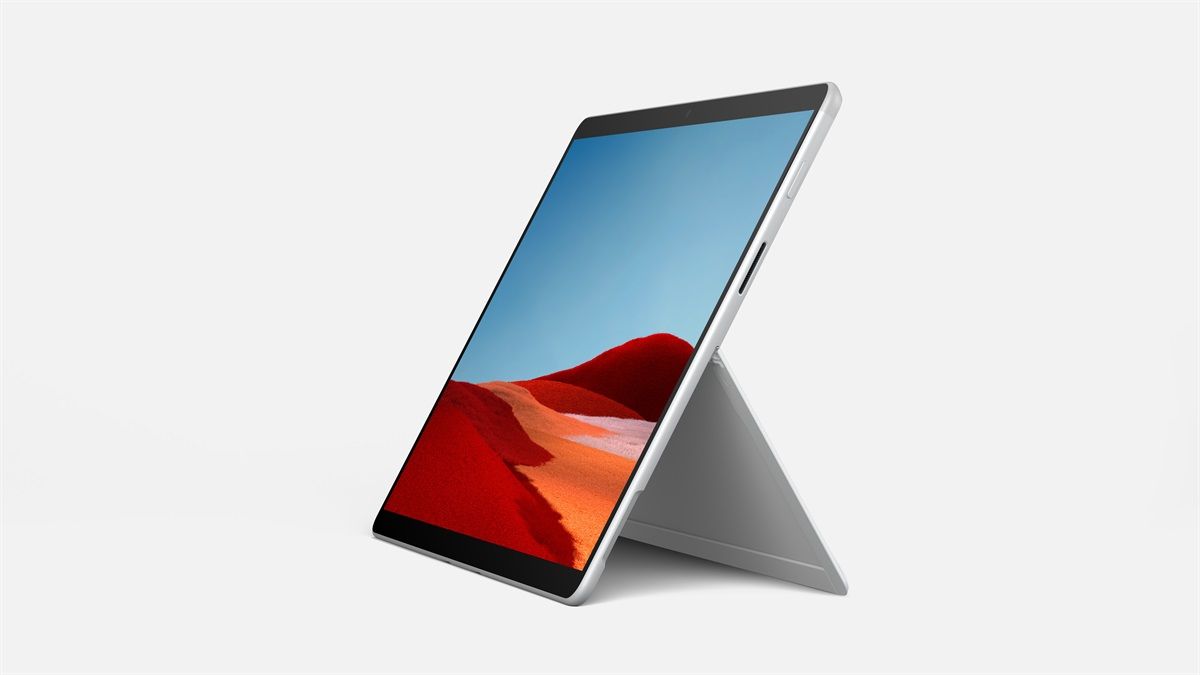
Best 4G tablet: Surface Pro X

Top angled view of Surface Pro X in Platinum

LTE support in a laptop is important for users who want to stay mobile, and if mobility is a priority for you, then the Surface Pro X is one of the best Windows devices you can buy. It’s one of the lightest and most portable devices on this list, and – at least until recently – it came with LTE support as a standard feature.

Let’s start with performance, which is likely one of the potential downsides of the Surface Pro X. This tablet is powered by the Microsoft SQ1 or SQ2 processors, which only have minor differences in performance between them. These are eight-core ARM processors, and they’re a couple of years old by now. That’s because they’re based on Qualcomm’s Snapdragon 8cx family, which hasn’t received a major upgrade since it was introduced. Still, this is a fairly powerful processor that can handle most day-to-day tasks just fine, and you can pair it with up to 16GB of RAM and 512GB of storage, which is a solid combination for a thin and light tablet like this.

Balancing out the performance, the display on the Surface Pro X is fantastic. This is a 13-inch panel, and it comes in the signature 3:2 aspect ratio all Surface devices have. This is a tall screen, which helps it feel bigger, and it’s great for productivity. On top of that, this is a very sharp screen, too, with a resolution of 2880 x 1920. Everything will look extremely sharp on this screen, and  Surface devices always have great displays. Of course, being a tablet, you can also count on touch and pen support.

Another highlight of the Surface Pro X is its camera setup, and there are actually two cameras here. On the front, there’s a 5MP camera with 1080p video, which makes it one of the best on any laptop. This camera also supports Windows Hello facial recognition by default, so you don’t have to worry about getting the right configuration. There’s a second camera on the back, and that one uses a 10MP sensor and supports 4K video.

The positivity continues as we move on to the design. The Surface Pro X weighs a mere 1.7lbs and it measures just 7.3mm in thickness, making it one of the lightest and most portable Windows devices around. Of course, adding a keyboard to the device will increase its weight and thickness, but that doesn’t take away from how portable this machine is. It also looks sleek, being the origin of the design we now see in the Surface Pro 8, too.

Ports are another potential downside of the Surface Pro X, however. The tablet includes two USB Type-C ports and a Surface Connect port, which you can use for docking and connecting external displays and other accessories. This is a somewhat limiting setup, but to be fair, it would have been nearly impossible to fit a USB Type-A or HDMI port on a device this thin. Still, you’re going to need adapters, and without Thunderbolt, your options are a bit more limited.

For a couple of years, Microsoft only offered the Surface Pro X with LTE support included by default, but recently, the company introduced a cheaper Wi-Fi variant. The LTE variants start at $999.99, which is still one of the cheapest Windows devices you can buy with LTE. That LTE support is powered by the included Snapdragon X24 modem, and it provides download speeds up to 2Gbps and uploads up to 316Mbps, making this one of the fastest LTE modems in any device on this list.

Being extremely portable and sleek, featuring a fantastic display and webcams, and also having a great LTE modem make the Surface Pro X one of the best 4G laptops you can buy today. However, keep in mind you need to buy the keyboard separately, which costs extra.

    Surface Pro X
    The Surface Pro X is a thin and light Windows tablet with a great display, cameras, and design. It also has very fast LTE.

      Features:

      Pros:

      Cons:

Best 4G laptop workstation: HP ZBook Fury 15 G8

HP ZBook Fury 15 G8

On the opposite side of the spectrum, the HP ZBook Fury G8 is a machine for those who need all the power they can get. This is a laptop that will handle just about anything you throw at it, and yes, it can stay connected on the go, even if you’re unlikely to travel that much with it.

Starting with performance, the HP ZBook Fury G8 is in a whole different class compared to the other laptops on this list. It’s powered by Intel’s latest Tiger Lake processors, but instead of 15W processors, you get 45W models. You can go up to an Intel Core i9-11950H or a Xeon W-11955M, both of which are eight-core, 16-thread processors that can boost up to 5GHz. There’s not much a machine like this can’t do. To add to that, you can configure this laptop with dedicated graphics up to an NVIDIA RTX A5000 with 16GB of memory, so graphics-intensive workloads are also a breeze for this laptop.

Rounding things out, you can configure it with up to 128GB of RAM and a massive 8TB of storage via four SSD slots. Of course, you’ll have to pay an eye-watering amount for a maxed-out configuration, but this is a beastly PC.

The 15.6-inch display on the HP ZBook Fury G8 gives you plenty of configuration options. It starts with a Full HD (1920 x 1080) at 250 nits of brightness, but you can upgrade to 400 nits, add a privacy screen, or spring for an ultra-sharp 4K (2840 x 2160) display. Even then, you can choose whether you want a 120Hz refresh rate and HP Dream Color support, or add touch capabilities to the screen. Regardless, you can get a fantastic display experience here.

For everything it gets right, the HP ZBook Fury G8 still comes with a 720p camera, which is unfortunate. Some laptops on this list have great webcams, and this one is just very standard and not that great. It does give you the option for Windows Hello facial recognition, but it’s not included by default. On that note, you can also choose whether you want a fingerprint reader on the device.

Of course, with all the power that’s packed into this laptop, you can’t expect it to be light or thin. The HP ZBook Fury G8 is just under 26mm thick – easily the thickest of any laptop on this list – and its weight starts at 5.18lbs. That’s for the minimum configuration, and considering all the upgrades available, you can probably go well beyond that. Despite that, the ZBook Fury G8 looks sleek and modern in its design, so it’s not going to stand out too much in a bad way. Just be aware you won’t be travelling (comfortably, at least) a whole lot with this laptop.

The upside of a large laptop like this is that you get plenty of space for ports. On the right, you get two Thunderbolt 4 ports, HDMI, and Mini DisplayPort, giving you a few options to connect external displays, plus an SD card reader. On the left, an RJ-45 port, two USB Type-A ports, a headphone jack, and a Smart Card reader. That’s about everything you could want in a workstation, so you’ll be very well served here. A downside of this setup is having the two Thunderbolt ports on the same side, but that’s not a huge issue.

Finally, we have 4G support rounding the connectivity options. HP offers the option for an Intel XMM 7360 modem, which promises LTE Cat9 speeds. That does allow you to stay connected anywhere, but for a laptop that goes above and beyond in every other way, this isn’t the fastest LTE modem you could get. Still, the option is there and it’s certainly usable.

It’s not for everyone – especially with its high price tag – but the HP ZBook Fury G8 is an incredibly powerful laptop, and if you want that kind of power with LTE support, then this is one of the best laptops around.

    HP ZBook Fury G8
    The HP ZBook Fury is an extremely powerful and highly-configurable mobile workstation, including the option for 4G support.

      Features:

      Pros:

      Cons:

Best budget 4G tablet: Surface Go 2

Surface Go 3 on black table

If you want an LTE-connected PC at a reasonable price or you want the most portable device you can find, the Surface Go 2 is the way to go. Yes, we’re aware of the Surface Go 3, but at writing time, the LTE version of that device hasn’t been launched yet, and frankly, it’s not a huge difference.

Of course, you can’t really expect the same level of performance on this device compared to others on this list. The LTE model is powered by an Intel Core m3-8100Y, which is a dual-core, four-thread processor that can boost up to 3.4GHz. This isn’t going to give you premium performance, but if you just want to browse the web, send some messages, or watch movies, this is a perfectly serviceable machine. This device also includes 8GB of RAM and a 128GB SSD, so it’s going to give you a solid experience for basic daily usage.

Instead of focusing on performance, Microsoft focused more on the display experience, and even this affordable tablet comes with the typical 3:2 aspect ratio of other Surface devices. This is pretty much the only Windows device at this price to have a display like this, and as we’ve mentioned, that tall screen is great for productivity and getting work done. Plus, it comes in Full HD+ (1920 x 1280) resolution, which isn’t always a guarantee in devices at this price point, and it’s great for a 10.5-inch panel like this. And, of course, since it’s a tablet, you get support for touch and the Surface Pen.

Another area where the Surface Go 2 shines is its cameras. Like the more expensive Surface devices, it includes a 5MP front-facing webcam with 1080p video, which is pretty much unheard of for a Windows device at this price point. On top of that, you get Windows Hello facial recognition – another rarity for a device this cheap. There’s also a second 8MP camera on the back, which also supports 1080p video.

In terms of the design, as we said at the top, the Surface Go 2 is the lightest device on this list. It weighs just over 1.2lbs for the LTE model, and it’s 8.3mm thin, so it’s also very thin. Combined with the relatively small size, this makes the Surface Go 2 the easiest device to take anywhere – you might even fit it in a purse if it’s big enough. Even if you add the Surface Go Type Cover, this is still the most portable device on this list.

The port selection on this device is very limited, though, which is somewhat typical of Surface devices. You get one USB Type-C port, a Surface Connect port, a headphone jack, and a microSD card reader. You can use a Surface DOc or USB-C hub to connect more peripherals, but out of the box, this setup isn’t the best.

On the other hand, the 4G connectivity on this device is actually pretty good. It’s powered by the Qualcomm Snapdragon X16 modem, which promises up to 1Gbps downloads and 150Mbps uploads, and that’s one of the fastest modems on this list. COnsidering much more expensive devices have slower modems, that’s great news, and it makes this even better as an ultra-portable PC.

The performance may not be everything you want in a laptop, but the Surface Go 2 is an extremely portable device that’s great for browsing the web. With one of the best 4G modems on this list, it’s also one of the best laptops you can buy, especially if you’re on a tight budget. However, the keyboard and Surfacr Pen are sold separately, which is an extra cost you may have to consider.

    Surface Go 2
    The Surface Go 2 is a small and lightweight tablet that's easy to take anywhere and delivers a solid experience across the board. It also has a fast 4G modem.

      Features:

      Pros:

      Cons:

Best 4G Chromebook: HP Elite c1030 Chromebook

HP elite c1030 on green

Finally, because not all laptops are Windows laptops, we have the HP Elite c1030 Chromebook, arguably one of the most premium Chromebooks out there. This is a convertible laptop with optional 4G support, and it’s premium in almost every way, including the price.

Performace-wise, the HP Elite c1030 Chromebook comes with Intel’s 10th-generation Core processors up to a Core i7-10610U. That may not be the newest hardware around, but considering Chrome OS is a very lightweight operating system, this will give you great performance for just about anything you might want to do on a Chromebook. It also comes with up to 16GB of RAM, an impressive number for a Chromebook. For storage, you get up either a 128GB or 256GB SSD, and that’s probably more than you need considering much of Chrome OS is web-based and local storage isn’t a primary focus.

The display on the Elite c1030 Chromebook is also great, being a 13.5-inch panel with a tall 3:2 aspect ratio. This is great for productivity, as it gives you more vertical space and surface area to work on. It also comes in Full HD+ (1920 x 1280) resolution, which is sharp enough for a display of this size. You shouldn’t have any trouble seeing this screen outdoors, either, with 400 nits of maximum brightness in the base model. You can even add a privacy screen if you want.

Above the display is the webcam, and it’s a 720p camera like many of the laptops we’ve looked at so far. This isn’t the best, but it’s serviceable in a pinch. Chrome OS doesn’t support infrared cameras like Windows Hello does, so that feature isn’t present here, but you do get a fingerprint reader to unlock the PC more easily.

In terms of the design, the HP Elite c1030 is as modern as business laptops get. It’s an all-metal laptop with a sleek design. It’s just under 16mm thin if you get the base model, or 17.78mm if you get an anti-glare display (including the privacy screen option). The weight starts at 2.87lbs, which is fairly light for an all-metal convertible of this size, so you can take it anywhere relatively easily.

As for ports, the HP Elite c1030 comes with two USB Type-C ports with power delivery and display output, plus one USB Type-A port, a headphone jack, and a microSD card reader. That covers most basic needs you might have, but the lack of a traditional display output like HDMI is a bit of a bummer. It’s also odd that such an expensive laptop doesn’t include Thunderbolt support in its USB Type-C ports.

Finally, of course, we have 4G support, which is once again enabled by the Intel XMM 7360 modem with Cat9 speeds. This means you’ll get up to 450Mbps downloads and 50Mbps uploads, and while this is certainly usable, it would be nice to see a faster modem available here.

All in all, this is objectively one of the best Chromebooks you can buy with 4G support, but it’s a very expensive laptop. If you want something on the opposite side of the spectrum, you may also want to consider the Samsung Galaxy Chromebook Go.

    HP Elite C1030 Chromebook
    The HP Elite c1030 is a premium Chromebook converitble laptop with high-performance specs and a sleek design. It also includes optional 4G support.

      Features:

      Pros:

      Cons:

If you value 4G connectivity, all of these laptops are fantastic choices, and they accommodate different budgets. If you want something ultra-premium, the Lenovo ThinkPad X1 Titanium Yoga is a fantastic option, as is the HP Elite Dragonfly Max. On the other end of the spectrum, the Surface Go 2 is an excellent affordable option that still gets you 4G support and solid performance for day-to-day tasks. We even have the rare 15-inch laptop in the form of the Latitude 7520. As a side note, all the Windows laptops on this list are eith er shipping with Windows 11 or support the upgrade if you want it.

There truly is something for everyone here. You may have noticed some of the laptops on this list also offer options for 5G. If that’s what you’re after, we also have a roundup of the best 5G-enabled laptops you can take a look at.

The post Here are the best 4G LTE laptops you can buy in 2022 appeared first on xda-developers.


from xda-developers https://ift.tt/3kJneYH
via IFTTT

Windows 11 Home vs Windows 11 Pro: Here are the major differences

As you may know, every major version of Windows comes in a few different editions. The same applies to Windows 11, which has mostly the same editions as Windows 10 aside from the upcoming Windows 11 SE for education. For most people though, it’s going to come down to Home and Pro. These are the two editions you’ll be able to find in stores or pre-installed on computers. If you’re looking for a comparison of Windows 11 Home vs Windows 11 Pro, we’ve rounded up all the major differences here.

Before anything else, the major difference between Windows 11 Home and Pro is pricing. If you want to buy a license by itself, the Windows 11 Home edition will cost $139.99, while Pro will cost $199.99. However, most laptops will just come with either one preinstalled. If you have Windows 11 Home and you want to upgrade to Pro, that will cost you $99.99. It’s also important to know that, for most people, Windows 11 Home will do pretty much anything you need it to do. As the name implies, the Pro edition is meant for professionals, usually people using their devices for work. There are some additional features on this front, but if you’re just buying a PC for personal use, Windows 11 Home is fine.

Summary of feature differences

If you want to see the major feature differences at a glance, here’s a quick rundown:

Feature Windows 11 Home Windows 11 Pro
Set up with a local account No Yes
Join Active Directory/Azure AD No Yes
Hyper-V No Yes
Windows Sandbox No Yes
Microsoft Remote Desktop Client only Yes
Windows Hello Yes Yes
Device encryption Yes Yes
Firewall and network protection Yes Yes
Internet protection Yes Yes
Parental controls/protection Yes Yes
Secure Boot Yes Yes
Windows Defender Antivirus Yes Yes
BitLocker device encryption No Yes
Windows Information Protection No Yes
Mobile device management (MDM) No Yes
Group Policy No Yes
Enterprise State Roaming with Azure No Yes
Assigned Access No Yes
Dynamic Provisioning No Yes
Windows Update for Business No Yes
Kiosk mode No Yes
Maximum RAM 128GB 2TB
Maximum no. of CPUs 1 2
Maximum no. of CPU cores 64 128

Windows 11 Home vs Pro: Setting up

The first big difference you’ll see between Windows 11 Home and Pro is when you’re setting it up for the first time. Windows 11 Home has a restriction that might be annoying for some — you need to set it up with an internet connection and a Microsoft account. At least, that’s the official way to do it, although you can trick Windows 11 Home into letting you set it up without a Microsoft account. You can also remove your Microsoft account from Windows 11 Home after the PC is set up, but Windows 11 Pro lets you simply set up your PC with a local account.

Windows 11 OOBE local account maker

Another difference that will be noticeable for business users is that Windows 11 Home PCs can’t be joined to Active Directory. Active Directory solutions are necessary for managing business devices, such as configuring access to certain resources, deploying apps, and so on. That also includes Windows 11 features like Group Policy. Those are all professional tools, so they don’t make sense for most Windows 11 Home users.

Windows 11 Home vs Pro: Virtualization and remote desktop

The next major difference between Home and Pro editions of Windows 11 is support for virtualization features in Windows. Windows 11 Home doesn’t support Hyper-V or Windows Sandbox. Plus, while it can be used as a Remote Desktop client, it can’t be a host, so you can’t access a Windows 11 Home PC remotely using Microsoft Remote Desktop. However, you can use third-party tools like TeamViewer for similar purposes.

Meanwhile, Windows 11 Pro supports all of these features. Hyper-V is a virtualization tool built into Windows, which means you can create virtual machines with it. If you want to try a different operating system, or use an older version of Windows for some reason, you can do it using Hyper-V. Virtual machines don’t make changes to your host PC, so you can do it all risk-free. Again, there are third-party apps such as VMware Workstation Player that let you do this on Home editions.

Hyper-V Manager

Windows Sandbox is an extension of this idea, but instead of running other operating systems, it just creates a clean copy of the OS you’re running. With Windows Sandbox, you can quickly install and try a potentially risky app and see if it’s dangerous before actually installing it on your machine. Windows Sandbox resets every time you open it, so it’s always a fresh start for testing.

Windows 11 Home vs Pro: Security

As business users often deal with especially sensitive information, there are also some extra security features in Windows 11 Pro. First, there’s support for BitLocker encryption. This feature encrypts data stored on your hard drive so no one else can access it. Even if your computer is stolen, your files are protected from users other than yourself.

Windows 11 Pro also comes with Windows Information Protection, or WIP. This is a data loss prevention tool, which can help prevent data from leaking from within a company. Using WIP policies, companies can prevent users from forwarding content outside of the company, for example. Since it’s built right into Windows, WIP offers a more hassle-free experience compared to third-party solutions. WIP can also separate personal and business data on a device, so if the PC is lost or stolen, business data can be deleted remotely without affecting personal data on it.

CPU and RAM support

Windows 11 Home and Pro share the same minimum system requirements, so they will mostly work on the same PCs. However, Windows 11 Home actually has different upper limits compared to Windows 11 Pro. For example, Windows 11 Home PCs can only have one CPU socket, and thus only one CPU. Similarly, Windows 11 Home only supports up to 64 CPU cores, while Windows 11 Pro can have up to 128.

CPU usage in Windows 11 Task Manager

Windows 11 Home is also limited to “just” 128GB of RAM. Of course, that’s going to be enough for just about any regular user — even the most advanced gaming PCs don’t need this much RAM. However, Windows 11 Pro takes that up to 2TB, and that’s mostly going to be useful if you want to create lots of virtual machines with plenty of RAM assigned to them.

Enterprise management features

Of course, the bulk of the differences between Home and Pro editions of Windows 11 are for businesses. Most device management capabilities aren’t available in Windows 11 Home at all. Windows 11 Pro, however, supports things like Group Policy, which lets IT admins configure certain policies for groups of devices in one go. There’s also Windows Update for Business, which lets companies control how updates are rolled out to their users to avoid unexpected issues.

Features exclusive to Windows 11 Pro include:

  • Mobile device management
  • Group Policy
  • Enterprise State Roaming
  • Assigned Access
  • Dynamic Provisioning
  • Windows Update for Business
  • Kiosk mode
  • Active Directory/Azure AD

In Windows 10, there was also the Microsoft Store for Business, but Windows 11 is going to use a different approach. Microsoft is actually retiring the Microsoft Store for Business altogether and replacing it with a new management experience. This new experience should still only work for Windows 11 Pro devices, though.


These are the core differences in Windows 11 Home vs Pro editions. As we’ve mentioned, most of them revolve around features meant for business users. Some are designed to protect especially sensitive information, while others have to do with quickly setting up devices for users and managing them remotely. For the average person walking into a store, you’re probably going to be just fine with Windows 11 Home. The odds are if you need Windows 11 Pro, you already know you need it and why.

If you have a PC with Windows 11 Home and you need Pro though, you can always upgrade. Check out our guide on upgrading to Windows 11 Pro if you need any help. If you’re curious about what’s new in Windows 11, check out our update tracker to know all about the latest updates.

The post Windows 11 Home vs Windows 11 Pro: Here are the major differences appeared first on xda-developers.


from xda-developers https://ift.tt/3i2XGaQ
via IFTTT

XDA Basics: How to format an SD card on a Mac

Apple computers — Macs — are known for their premium builds and capability. Take the new MacBook Pro models as an example; they’re extremely powerful, energy efficient, and merely unrivaled. It’s important to keep your Mac protected from scratches and dust, so take a look on our list of best MacBook Pro cases. SD cards are a convenient way to transfer data to and from DSLR cameras. Formatting them on macOS is a simple process, and it’s easier than manually deleting all of the files stored on them. Here’s how to format an SD card on a Mac.

How to format an SD card on a Mac

  • Make sure your SD card is connected to your Mac.
  • Launch the Disk Utility app that comes pre-installed on your Mac. It’s usually in the Utilities folder, but if you can’t find it, you can also use Spotlight Search.
    Disk Utility app
  • In the sidebar (on the left), you will find a list of all connected storages. Find your SD card and click on it.
    Disk Utility app
  • Once you do, you will find an Erase button in the middle of the top section. Hit it.
    Disk Utility app
  • You will be prompted to enter the name of the SD card and choose the type of formatting operation. Enter its name.
  • Choose ExFAT as the operation you want it to undergo, as it’s compatible with a wide range of SD cards.
    Disk Utility app
  • Once you fill in the required details, click on Erase.
  • The process will then start. How long it takes depends on the SD card and the amount of data on it. It shouldn’t take too long. though.
  • Once it’s over, you will see an alert stating so. Click on Done.
  • Voila! Your SD card is as good as new now.

Formatting ensures that all files and folders stored on an SD card are completely destroyed and removed. It’s always a better idea than manual deletion, assuming you don’t want to keep any files on it.

The post XDA Basics: How to format an SD card on a Mac appeared first on xda-developers.


from xda-developers https://ift.tt/3rLjixP
via IFTTT

These are the best Corsair PC cases you can buy in 2022

Corsair is a popular name in the PC hardware space that needs no introduction. The company is known for making high-quality PC components including CPU coolers, power supply units, SSDs, and more. Corsair is also home to some of the best PC cases you can find on the market. In fact, a couple of Corsair cases have made it our collection of the best PC cases you can buy right now. Corsair has more than a few PC cases in its portfolio, so we wanted to dish out a dedicated list. In this article, we’ll be taking a look at some of the best Corsair cases you can buy right now in 2021.

Navigate this article:

Best overall Corsair case: Corsair iCUE 5000X RGB

A black-colored Corsair case with RGB fans on the front.

Corsair has a very good selection of mid-tower cases and we think its iCUE 5000X RGB case is the one that most people should be buying. The case has a lot of tempered glass panels that adorn the front, back, and side panels. It’s one of the heaviest PC cases around and most of the weight comes from the huge pieces of tempered glass panels. The top and the front panels are held together in place with the help of magnets instead of screws and latches, and it comes off rather easily. Since the front panel is also made out of glass, Corsair has added some sizeable gaps to let air flow through. These gaps are also protected by mesh coverings, which is good if you happen to have pets in your house.

The Corsair iCUE 5000X RGB case comes with three RGB fans pre-installed on the front. They add a good amount of RGB to the case out of the box. They’re also connected to a PWM repeater and an RGB controller on the back of the motherboard tray. Yes, the case has a lot of removable panels to work with but it’s not particularly difficult to take it apart. The Corsair iCYE 5000X RGB sits on the larger side of the ATX cases and it has plenty of space inside for a full-fledged high-performance build. Corsair has made this case deep enough to add more space for side intake, although you’ll have to spend more to buy fans for this particular spot. It can take three 120mm fans, and the cables can directly be connected to the RGB controller for ease of use.

The main compartment of the Corsair iCUE 5000X RGB case has enough room for up to an ATX size motherboard. You can also install GPUs up to 420mm long and CPU coolers up to 170mm tall. Lack of side intake fans will make the case look very empty, so do keep that in mind if you’re planning to buy this unit. The case lets you install PSU up to 225 mm in length. There’s also enough space to add two 3.5″ hard drives and up to three 2.5″ drives. The case also comes with three high-quality Corsair Velcro straps installed in the cable bar, which is nice. You’ll find additional cable straps inside the box if the pre-installed straps aren’t enough.

The Corsair iCUE 5000X RGB is a fantastic case for liquid cooling. There’s plenty of space for mounting radiators. You can easily mount a 360mm radiator on the top or you can also replace the front fans with radiators if you like. Alternatively, you can also install the 360mm radiator on the side intake spot, but it may reduce your GPU clearance. Overall, we think the Corsair iCUE 5000X RGB is a fantastic mid-tower case for those looking to build a high-end rig. Corsair also sells a white variant of this case and it’s perfect for those looking to build a PC with all-white aesthetics. We also recommend picking up the iCUE 4000X version if you’re not going to use the side intake panels to add more fans.

    Corsair iCUE 5000X RGB PC case
    The Corsair iCUE 5000X RGB is a great mid-tower PC case for high-end builds. It comes with three RGB fans pre-installed and there's enough room for adding more fans and a 360mm radiator too.

      Features:

      Pros:

      Cons:

Alternate best overall case: Corsair iCUE X465 RGB

A white-colored Corsair PC case with RGB lights on the front

The Corsair iCUE 465X RGB is yet another fantastic mid-tower that deserves your attention. It’s our pick for the second-best Corsair case you can buy right now. The 465X RGB is very similar to the 5000X RGB, except this one doesn’t have space for the side intake fans. Also, this one’s not entirely made out of glass. You only have two tempered glass panels with the 465X as opposed to the four glass panels on the 5000X case. You get a see-through glass panel for the side and there’s a glass panel that goes on the front of the case.

The iCUE 465X RGB also comes with three LL120 120mm fans pre-installed on the front panel. The LL120 fans offer powerful airflow with up to 1500RPM. The fans also use addressable RGB LEDs that can be easily controlled using an RGB controller and Corsair’s iCUE software. The case also conveniently includes what Corsair calls the iCUE Lighting node CORE. It can be used to control up to 6x RGB fans without the need for a fan hub.

The best thing about the case is that it has plenty of room for all your components. You can easily install up to an ATX motherboard in this case without any issues. You can also install a GPU up to 300mm in length and a CPU cooler up to 160mm in height. There’s also enough space to install up to two 3.5″ and four 2.5″ drives inside the case. In addition to three pre-installed fans, there’s enough space to add up to 4 more 120mm fans in there. You can also easily mount up to a 360mm radiator either on the top or the front panel by replacing the fans. Corsair obviously recommends using one of their liquid coolers, but it’s safe to say that you can install any AIO coolers available on the market.

Despite being more affordable than the iCUE 5000X RGB case, the 465X comes with some thoughtful additions such as the included RGB fans, a vertical expansion slot for the GPU, a lighting node controller, cable pass-through, and more. The overall build quality is also pretty good. It comes with four feet supported by rubber padding at the bottom. You also get mesh filers for all the vents, which is great. There’s one on top of the case, one on the front, and the last piece is at the bottom. It’s also relatively easy to work with this PC case as it’s not too complicated to disassemble.

We think the Corsair iCUE 465X is a solid alternative to the 4000X, 4000D, or even the 4000 airflow case since they’re all essentially the same in size. The 465X happens to be the most affordable of them all, and we highly recommend it for anyone who’s looking to build a mid-range PC. This isn’t suitable for installing a custom cooling loop though, so you might want to look at other options. Perhaps, a full tower case would be great for a PC involving a sophisticated custom cooling loop.

    Corsair iCUE 465X RGB PC case
    The Corsair iCUE 5000X RGB is a great full-tower PC case for high-end builds. It comes with three RGB fans pre-installed and there's enough room for adding more fans and a 360mm radiator too.

      Features:

      Pros:

      Cons:

Best full tower case: Corsair Obsidian 1000D

a black colored PC case with RGB lights and an open side panel

The Corsair Obsidian 1000D is one of the best full-tower cases you can buy right now. It’s one of those cases that you may have seen in a lot of enthusiasts builds. Corsair calls it a super tower case, which we think is an apt name because it’s kind of crazy the kind of builds you can achieve with this particular case. The Obsidian 1000D weighs 29.5lbs and stands 27.4 inches tall. It’s a massive PC case that’s big enough to house two separate builds inside. Yes, you can build two full PCs inside this case. We think it’s perfect for those who want two powerful PCs running at the same time.

The Corsair Obsidian 1000D is one of the best PC cases you can buy for a full-fledged liquid-cooled build. There’s enough inside this case to have a full custom cooling loop, complete with radiators, a reservoir, and more. The Obsidian 1000D can have up to two 480mm radiators on the front, a 420mm radiator on the top, and a 240mm at the back. Alternatively, you can also have up to ten 120mm fans on the front along with three 140mm blowers for the radiators on the top. The possibilities are endless when it comes to a PC case like this with a lot of room to work with. The case also tempered glass — a lot of them — that allow you to see the RGB fans and all the components inside the case.

The Obsidian 1000D supports E-ATX, ATX, microATX, and Mini-ITX motherboards. The chassis is made out of aluminum and steel and the construction, as you’d expect, is quite sturdy. You can either build two separate builds inside the case or use all the room you have to dish out a high-performance PC with a sophisticated cooling solution. This particular case comes with up to 10 expansion slots and you can install a GPU that’s up to 400mm in length. There’s also enough clearance for CPU coolers up to 180mm in height. As for the storage, well, the Obsidian 1000D will let you add up to five 3.5″ and up to six 2.5″ drives to your rig. Corsair didn’t really skimp on anything important in particular, but it would’ve been nice to have mesh filters to cover the air vents. it’s not necessarily a huge deal but these little things start to add up, especially when you consider the $500 price tag of this PC.

That’s right, the Corsair Obsidian 1000D carries an expensive price tag of over $500, making it the most expensive Corsair PC case you can grab right now. That being said, this is a full tower PC case with enough space to build the gaming PC of your dreams, complete with a custom cooling loop. We don’t recommend this case for an entry-level or even a mid-range PC. The PC building enthusiasts, however, will have a lot of fun building inside a huge case like this. Being able to two separate PCs inside a single case, as we mentioned earlier, makes this case very desirable for advanced users.

    Corsair Obsidian 1000D
    The Corsair Obsidian 1000D full-tower cabinet is the biggest case we have in our collection. You can build two separate PCs inside this case.

      Features:

      Pros:

      Cons:

Second best full tower case: Corsair iCUE 7000X RGB

A white colored Corsair pc case sitting on a desk next to a working setup.

The Corsair iCUE 7000X RGB is similar to the iCUE 5000X RGB, except this one’s much bigger in size. It’s our pick for the second-best full tower Corsair PC case you can buy right now, next to the Obsidian 1000D. It’s not as big as the Obsidian, though. The iCUE 7000X RGB brings a good mix of features and offers plenty of space inside for all your PC components. The 7000X RGB case comes with three tempered glass panels — one on the side, one on the front and the last one on the top. That being said, you can also buy an airflow variant of this case that comes with a mesh panel on the front for better airflow.

The iCUE 7000X RGB is a massive PC case. Even though it looks identical to, say, the 5000X RGB case, we’re looking at massive dimensions. It’s so big it actually comes pre-installed with three 140mm fans on the front as opposed to 120mm fans. You can install three more 140mm fans on the top panel and another 140mm fan at the back. Notably, there’s also space to add up to four 120mm fans on the side for intake, but you’ll have to remove the metal shroud to add those fans. It’s worth pointing out the case only comes with three 140mm fans, and you’ll have to buy the rest. You do get Corsair Lighting node CORE to connect more fans though. That’ll make it easier to control all the fans via the iCUE software.

The 7000X RGB case, as you can see, comes with a separate compartment for the PSU. It’s covered with a metal shroud with a small opening to show off the branding. The case also comes with plenty of clearance for GPUs and CPU coolers. You can install a GPU that’s up to 225mm in length and a CPU cooler that’s up to 190mm in height. You also get space to add as many as six 3.5″ and three 2.5″ drives in this case, which is plenty for even the most advanced users. Radiator compatibility isn’t an issue either since the case allows you to install up to a 480mm radiator. That should be enough to dish out a full-fledged custom cooling loop too.

The Corsair 7000X RGB case comes with a total of 11 expansion slots out of which are 3 are vertical. This will allow you to install even the newer thick GPUs vertically inside the case. The vents are covered with mesh filters, which is also a nice addition. Even though it’s not as big as the Obsidian 1000D, we think the 7000X RGB should be enough for a high-end PC build involving a sophisticated custom cooling loop. There’s enough space to install a full loop complete with radiators, reservoirs, and more. You can add those even after installing a full-sized ATX motherboard in there. It’s not recommended for a mid-range build though. You might want to step down to an iCUE 5000X RGB cabinet in that case and same the extra money to buy other components.

    Corsair iCUE 7000X RGB full tower PC case
    The Corsair iCUE 5000X RGB is a great full-tower PC case for high-end builds. It comes with three RGB fans pre-installed and there's enough room for adding more fans and a 360mm radiator too.

      Features:

      Pros:

      Cons:

Best small form factor case: Corsair Crystal 280X RGB Micro ATX case

 A white-colored Corsair PC case with RGB fans on the front

In addition to its spectacular lineup of full tower and mid-tower PC cases, Corsair also has a couple of cases for small form factor PCs. The options are fairly limited in this space, but we think the Corsair Crystal 280X RGB is worth checking out if you’re looking to build a small form factor PC. The Cyrstal 280X RGB is a Mid-Tower ATX case that’s suitable for Mini-ITX and Micro-ATX motherboards. This particular case is made out of a combination of steel and plastic and it uses tempered glass panels for the side, top, and front left portion of the case. The top and front of the chassis are divided into two sections. Besides the tempered glass, the rest of the portion is covered with steel. The tempered glass on the top is elevated to allow good airflow.

Even the front panel covering the RGB fans is made out of glass, there are gaps to allow optimum airflow. Speaking of RGB fans, the case comes with two 120mm fans pre-installed. These are Corsair’s LL120 fans that are connected to the company’s Lighting Node PRO digital RGB lighting controller. This means you get a fantastic RGB lighting experience that’s fully customizable out of the box using Corsair’s iCUE software. In addition to the included fans, there’s enough space to mount as many as four more 120mm fans inside the case. You can install two more 120mm fans on the top and two more of these at the bottom under the motherboard. The bottom fans may cause clearance issues with the GPU though, so do keep that in mind.

Since the chassis is separated into two sections, the PSU unit can be installed behind the motherboard. At the back, you get four PCIe expansion slots and space to route the motherboard I/O. You can install an exhaust fan at the back, so it’ll have to be at the bottom. The best about this case is that you get mesh filters for each vent to keep the dirt and dust particles away from the components. As a PC case that’s suitable for small form factor builds, you do have too much space to accommodate a complex build. It can accommodate a max GPU length of up to 300mm and a max CPU cooler height of up to 180mm. You’ll also be forced to settle for an AIO cooler instead of a custom loop. All things considered, this is a great mid-tower case, albeit a bit expensive.

Even the SFF PC cases are fairly limited, you can find slightly cheaper options on the market. That being said, this is your option if you’re hellbent on buying a Corsair PC case for your build. It’s a bit expensive, but it’ll definitely get the job done. It’s also relatively easier to work with this case despite the small form factor, so that’s good too. Corsair also makes a non-RGB version of this case which isn’t as expensive as this one, so that’s worth considering too.

    Corsair Crystal Series 280X RGB PC case
    The Corsair Crystal 280X RGB case is slightly expensive for an SFF PC case but it offers all the features that are essential to build a capable small form factor PC.

      Features:

      Pros:

      Cons:

Best airflow case: Corsair iCUE 220T RGB Airflow

Black and white variants of the Corsair 220T RGB case standing next to each other

While all Corsair cases that we’ve mentioned above offer good airflow, we think the iCUE 220T RGB is the superior one that’s made specifically for those who’re looking for a case that offers the most amount of airflow. The Corsair 220T RGB, as you can see, looks very different from other Corsair cases we’ve seen so far. Unlike some other Corsair cases, the 220T RGB has perforated front metal for good airflow. It’s got a cutout that acts as vents to move the air in and out of the chassis. In typical Corsair, you get three 120mm fans on the front that comes pre-installed out of the box. The RGB lights aren’t clearly visible as they are in a case like the iCUE 5000X RGB, but it still looks pretty cool.

The Corsair 220T RGB is a mid-tower PC case that can accommodate Micro-ATX, ATX and ITX motherboards. It offers enough clearance for a 300mm GPU and a 160mm CPU cooler. It’s not the most spacious PC case we’ve seen from Corsair, but it definitely gets the job done. The CPU cooler clearance is big enough to install a big size cooler like the Noctua NH-D15 cooler. Additionally, you also have space to install two 2.5″ and two 3.5″ drives inside the chassis. You get as many as seven expansion slots, although none of them is vertical to allow vertical GPU mounting. There’s some space to install a single 120mm exhaust fan at the back though.

It’s worth pointing out that the 22T RGB case comes with an RGB controller but lacks a fan controller. You can connect three more RGB fans on the controller that’s powered by a SATA header. It’s not necessarily a deal-breaker although we would’ve preferred to have a fan controller with PWM connectors to control the fans. Not everything is bad about the Corsair 220T though. For instance, you do get mesh filters for each vent which is a nice addition to keep the dust and dirt particles away from the components. In addition to the three pre-installed fans, you also get space for installing three more 120mm fans in the chassis. You can also mount a 240mm radiator at the top or a 360mm radiator on the front panel. You may have to remove the HDD cage depending on the clearance, so keep that in mind.

Overall, we think the Corsair iCUE 220T RGB case is a great option for those who’re looking to get more airflow in their chassis. A case like this with a perforated front panel is bound to have better cooling than something like the 5000X RGB that has a glass panel with small air gaps. This makes it desirable for high-performance PCs too. High-end PCs with, say, a big-sized CPU cooler like the Noctua NH-D15 may suffer inside cases with poor airflow and this one is a perfect alternative for that. It’s also a mid-tower case with plenty of room inside for a sophisticated build, so definitely worth checking out.

    Corsair iCUE 220T RGB Airflow PC case
    The iCUE 220T RGB Airflow is one of the best airflow PC cases you can buy from Corsair. It comes with three pre-installed 120mm fans to push air out through the perforated front panel.

      Features:

      Pros:

      Cons:

Second best airflow case: Corsair 4000D AIRFLOW

A black-colored corsair base with perforated front panel for better airflow

Corsair, in case you don’t know, makes an airflow version of a lot of its PC cases. The iCUE 5000X RGB case, for instance, also has an airflow variant that replaces the front glass panel with a mesh panel for better airflow through the chassis. The same is the case with its bigger 7000X chassis too. While those are great options to consider too, we think it’s the Corsair 4000D AIRFLOW that deserves your attention in this space. The 4000D AIRFLOW is a fantastic mid-tower case that’s highly popular in the PC hardware community for its airflow. It’s a case that lives up to its name, offering plenty of front-to-back cooling clearance.

Instead of using a tempered glass front panel, the 4000D AIRFLOW comes with a front panel covered in triangle perforations. It’s quite the look but it definitely offers impressive airflow to keep your components cool even under heavy load. The case has enough space to install as many as six 120mm fans in total. You can install three of them on the front panel, whereas two more can go on the top one. There’s also a space for another 120mm fan at the back that acts as an exhaust vent. Corsair only bundles two of these fans, which means you’ll still have to buy the rest of them. You can also go with 140mm fans, although there’s only space for two of them on the front and at the top as opposed to three.

As for the radiator mounts, the 4000D AIRFLOW case will allow you to install a 360mm radiator on the front and a 240mm radiator on the top. There’s also enough space inside the chassis to add two 2.5″ and two 3.5″ drives. As for the GPU and CPU cooler clearance, you can install a card up to 260mm in length and a cooler up to 170mm in height. The 220T RGB case has 9 PCIe expansion slots in total out of which 2 are vertical slots. Corsair is using tempered glass for the side panel to let you show off your internal components. The top panel is basis metal with vents to allow more airflow. Yes, there’s a lot of airflow in this chassis, so you can use this to build a high-performance PC too.

Corsair has also added velcro straps to help you manage the cable properly behind the motherboard. It’s a pretty neat addition that a lot of PC cases don’t come with. Corsair has definitely cut some corners here with this case and it’s not as premium as some of the Corsair cabinets. Well, that’s because this is one of the most affordable cases on this list coming at just $79. That makes it suitable for mid-range or even entry-level PC builds involving relatively low-powered components. There aren’t too many reliable PC cases in this price range, which makes it particularly desirable. Overall, there’s a lot to like about the 4000D AIRFLOW case from Corsair. Sure, there are better airflow cases on the market but none of them is as affordable as this.

    Corsair 4000D AIRFLOW PC case
    The Corsair 4000D AIRFLOW is one of the best airflow cases you can buy to have a full front-to-back airflow for your components. It comes pre-installed with two RGB 120mm fans.

      Features:

      Pros:

      Cons:

Best budget case: Corsair Carbide 110R

A black colored Corsair pc a plain front panel

While the Corsair 4000D AIRFLOW is fairly affordable, we think the Corsair Carbide Series 110R also deserves your attention as one of the most affordable cases in this collection. It’s the successor to the Corsair Carbide 100R PC case which can still buy. Although the stocks for the older case are fairly low and the new one offers more features for a slight premium. We think the new one is also a better-looking case, so it’s worth considering just for that. The Carbide 110R, as you can see, is a fairly simple-looking case with little to no bling. It’s not a head-turner, but it offers a great set of features that are good enough for an entry-level PC build.

The Corsair Cardibe 110R is a compact Mid Tower chassis. You can get it with either a steel side panel or a glass tempered glass side panel depending on whether or not you want to show off the internal components of your PC. The fact that it’s a fairly simple-looking PC case makes it ideal for most setups. It’ll easily blend in any setup without any issues. The chassis is big enough to fit all the essential components that are necessary for a fairly potent PC. You can install as many as four 120mm or two 140mm fans inside the case. Corsair says there’s also space to mount multiple radiators, although we suggest you keep your expectations in check. This is an entry-level case, so you might want to look else for sophisticated builds involving liquid cooling solutions. We think you’ll be able to comfortably install a single 240mm radiator inside the chassis if you really want an AIO liquid cooler.

The best thing about this case is that Corsair didn’t skimp on important features such as dust filters or I/O ports. There’s also a separate PSU shroud that houses the power supply unit separately, away from other core components of the system. The dust filters on both top and the bottom are removable, which means they’re very easy to clean. Once you get inside the chassis, you’ll notice that it’s big enough to accommodate a full ATX motherboard with some room to spare. The internals of the chassis are well laid out with plenty of cable management cutouts too. As a budget option, you don’t get velcro straps with the case, but you do get cable ties inside the box, which is a nice addition.

Overall, we think the Corsair Carbide 110R is a fantastic option for those looking to build an entry to mid-range PC. It’s not the best when it comes to airflow, but it’s a complaint given the affordable price tag of this case. There are other alternatives that you might want to check if that’s your priority. This is a fairly simple case that’s good enough to get the job done. You can also step down to the 100R if you want to save more money. However, we think the new one is much better in terms of features.

    Corsair Carbide 110R PC case
    The Corsair Carbide 110R is one of the most affordable PC cases in this list that comes with a simple design and a good set of features.

      Features:

      Pros:

      Cons:

Best Corsair cases: Final Thoughts

As you can see, Corsair has plenty of PC cases on offer that are worth considering for your next PC build. We think the Corsair iCUE 5000X RGB is an excellent case for most users, be it a mid-range or a high-end build. We’ve also added the Obsidian 1000D as an option for enthusiasts who’re looking to build two PCs inside a single case. Lastly, the 4000D AIRFLOW is also a fantastic case that offers great thermal performance without costing too much money. There are a lot of other Corsair cases on the market, but these are the ones that are worth considering. You can also check out our other collections like the best motherboards or even the best CPUs if you’re looking to build a new PC from scratch. Alternatively, you can also join our XDA Computing Forums to discuss your build or get more product recommendations from the community members.

The post These are the best Corsair PC cases you can buy in 2022 appeared first on xda-developers.


from xda-developers https://ift.tt/3Ira7sc
via IFTTT